Turtles & Tortoises of Morocco
Ancient, long-lived, and heavily collected
Morocco is home to one tortoise species, the widespread Moorish Tortoise, as well as two turtle species: the Mediterranean Pond Turtle, abundant throughout the country's freshwater ecosystems, and the European Pond Turtle, much rarer and found only in a few remaining pockets of suitable habitat.
species
subspecies
All three species face different pressures. The Moorish Tortoise suffers from its own popularity, heavily collected from the wild to supply the illegal wildlife trade despite being protected. The Mediterranean Pond Turtle's southernmost populations, of the Mauremys leprosa saharica subspecies, face lengthening droughts that may isolate populations from one another. But it is the European Pond Turtle that is most at risk in Morocco, with a highly fragmented distribution and very few remaining populations.
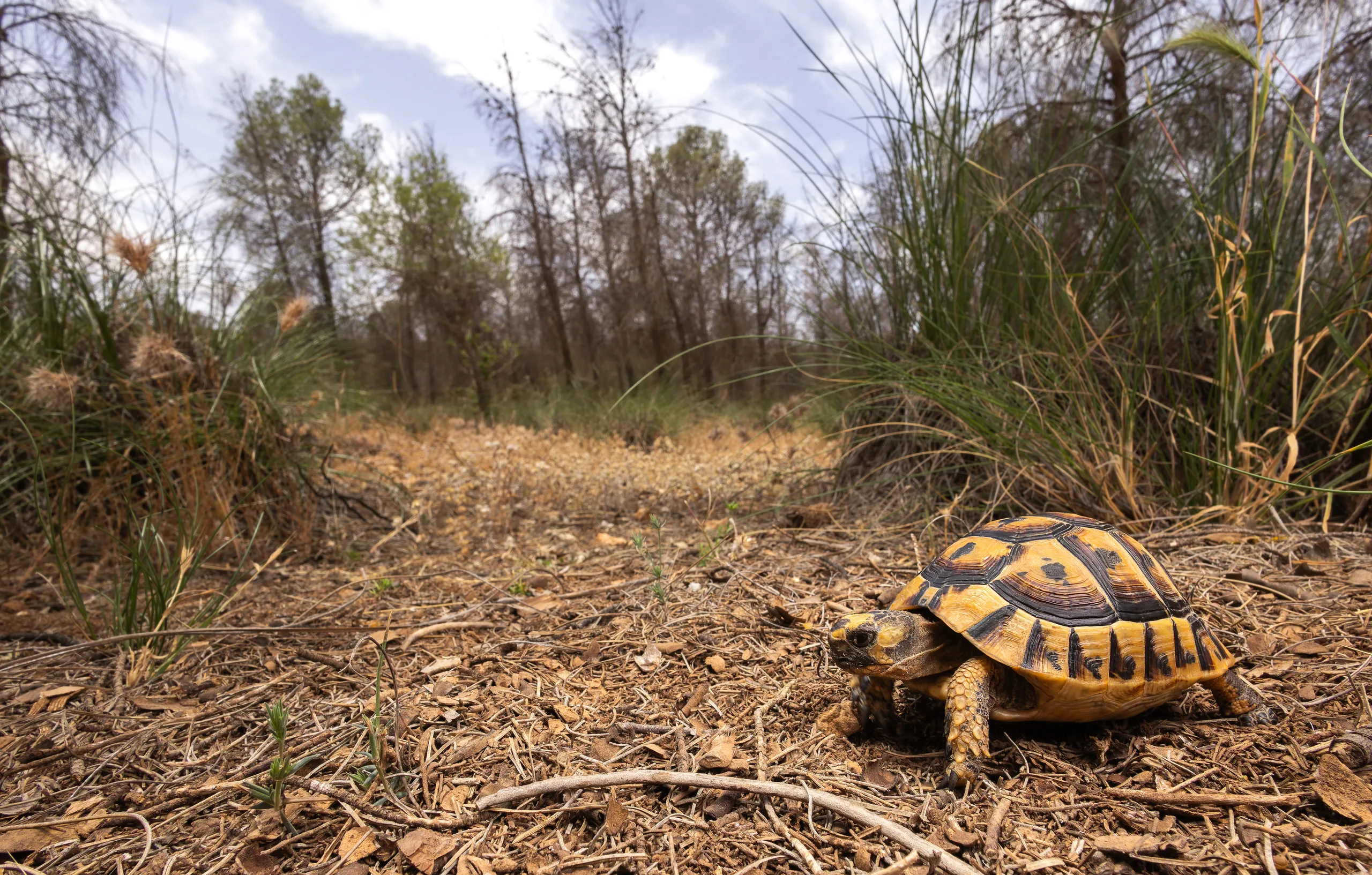
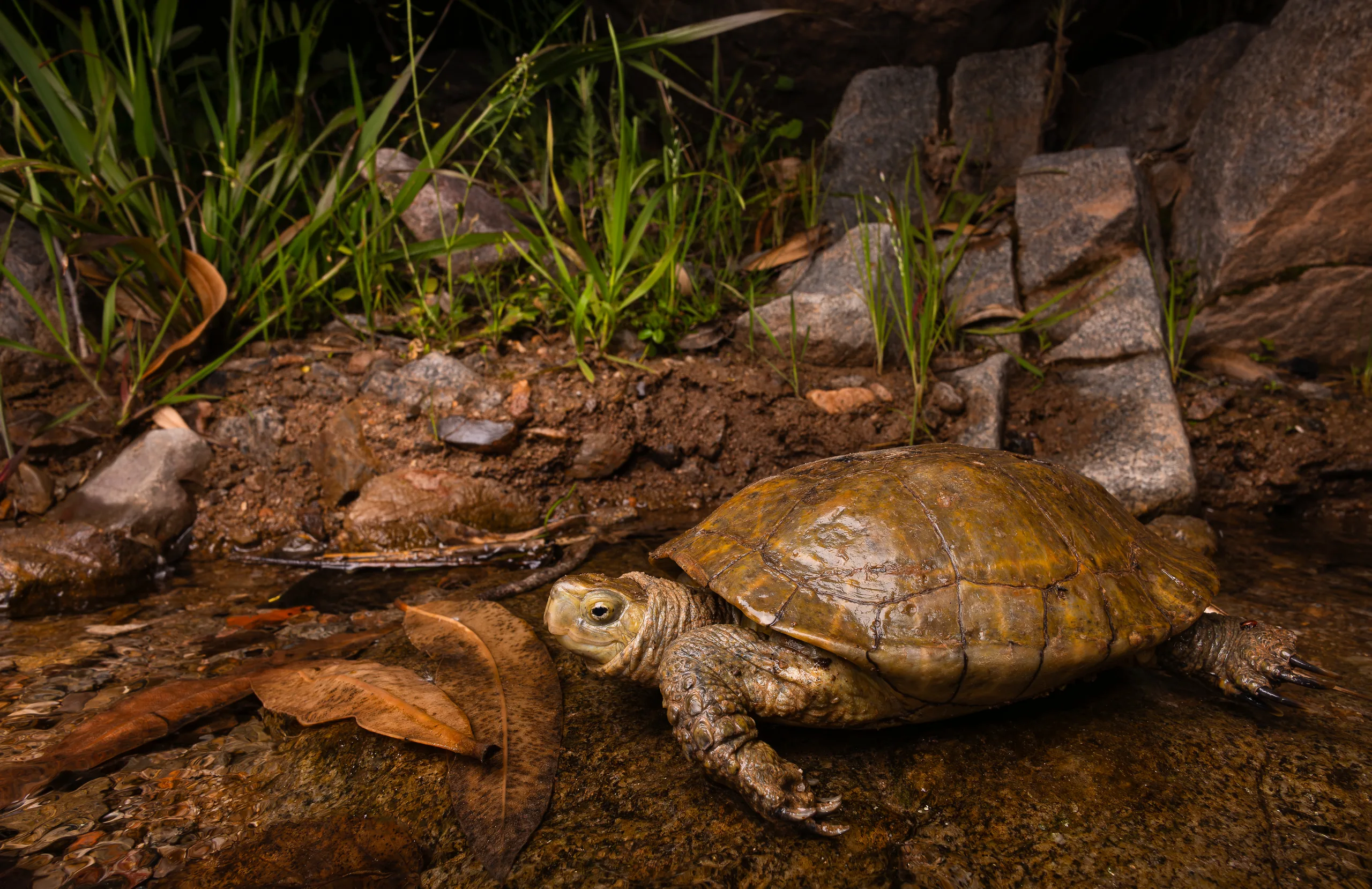
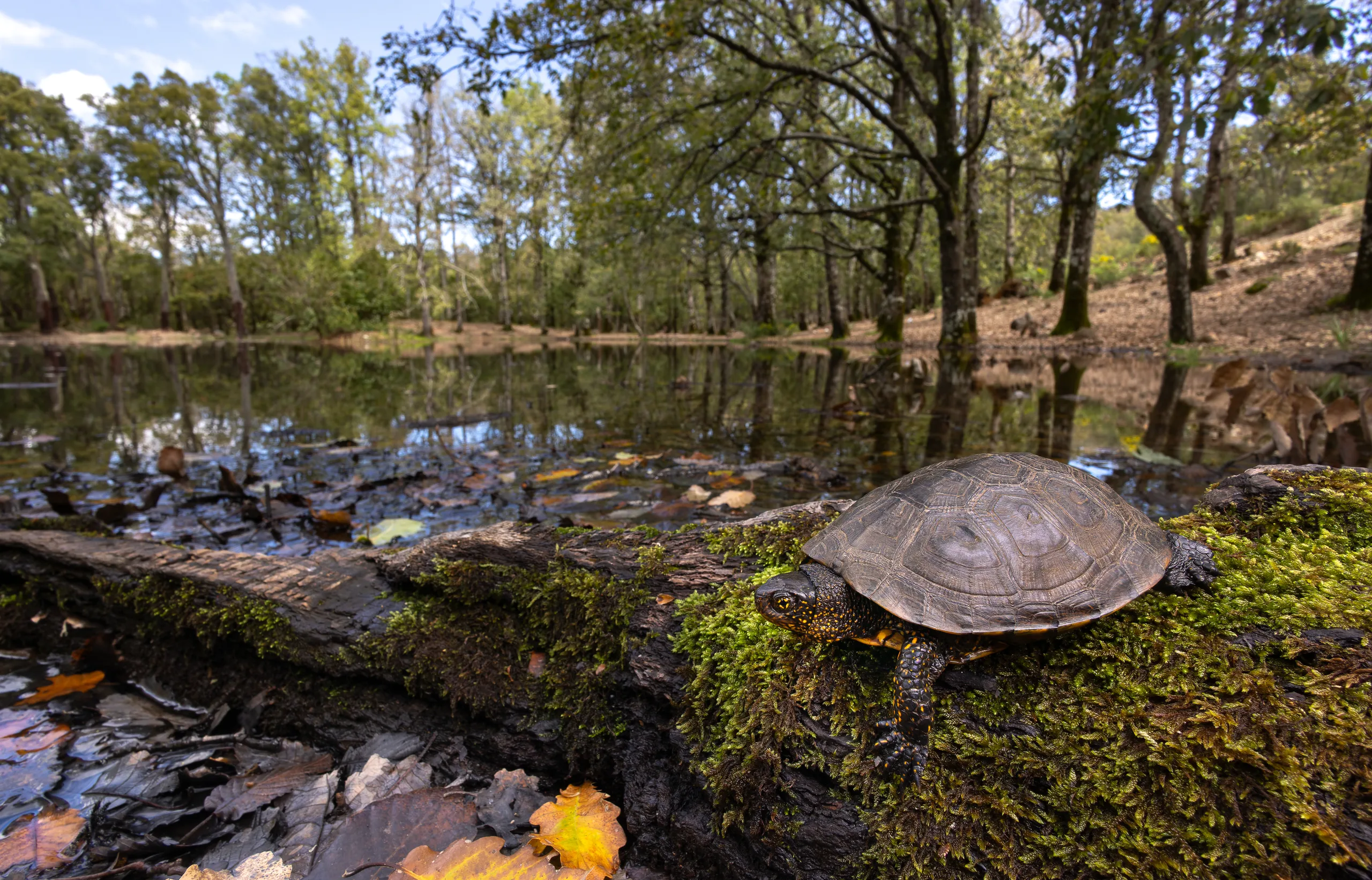 Testudo graecaMoorish Tortoise
How to identify a Turtle in Morocco
Morocco's three Turtles and Tortoises are harmless. Keep your distance, this guide is for identification, not to encourage the handling of harmless species.
1 Is it really a Turtle or a Tortoise?
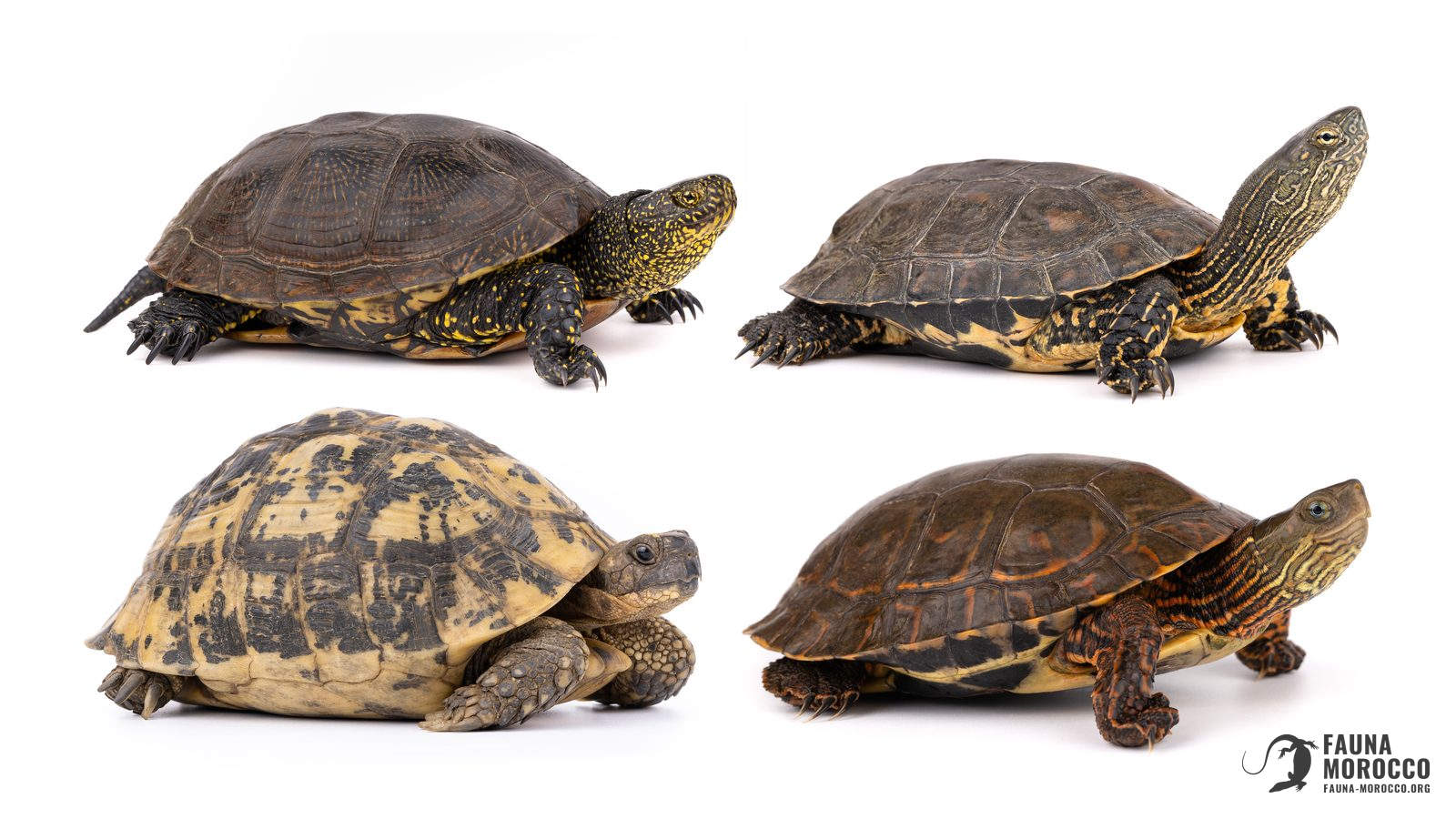 COLLAGE: turtle or tortoise on white
Three quick checks
- All species have a shell
- Round or oval shape from above
- A beak and no teeth
2 Which species is it?
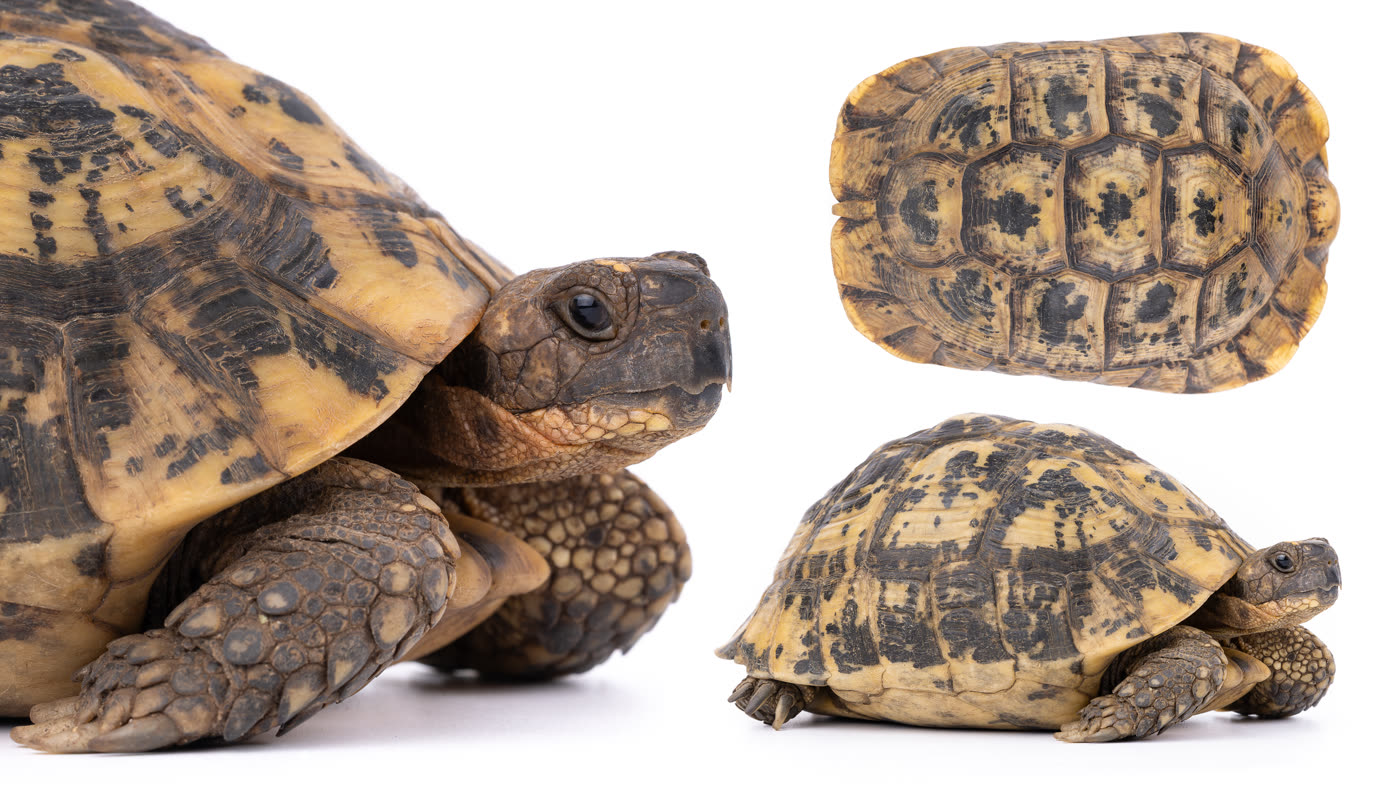
Moorish Tortoise
Testudo graeca
- High-domed shell
- Light colour with dark markings
- Terrestrial
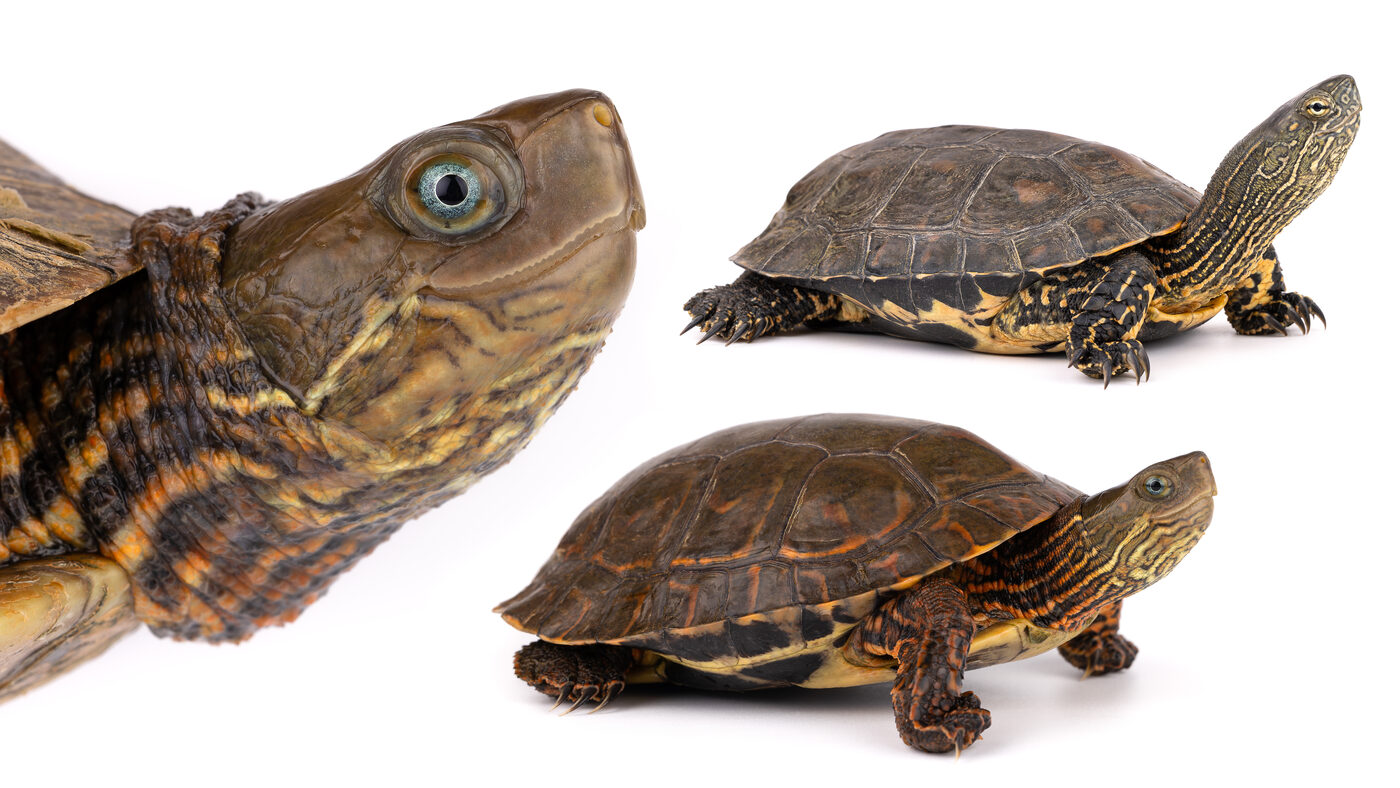
Mediterranean Pond Turtle
Mauremys leprosa
- Flatter shell, fairly uniform colour
- Lines on the neck
- Pale eyes: grey to green in the nominate subspecies, blue in the saharica subspecies
- Aquatic
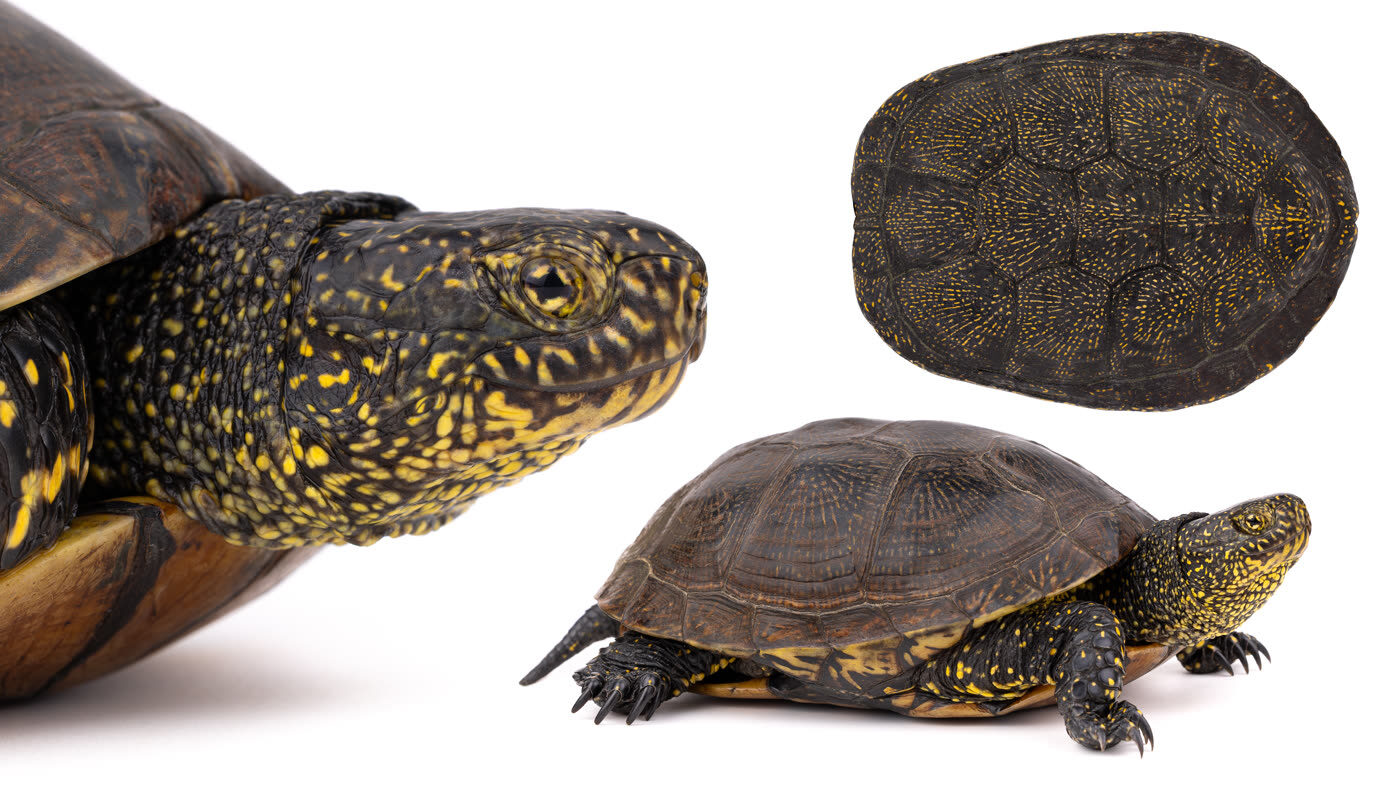
European Pond Turtle
Emys orbicularis
- Flatter, dark shell, often with small yellow dots
- Dark body with many yellow dots
- Restricted to small pockets in the Rif and Middle Atlas
- Aquatic
Turtles & Tortoises of Morocco
Is it legal to own or buy a tortoise in Morocco?
No. The Moorish Tortoise (Testudo graeca) sold in souks is protected in Morocco under law 29-05, where it falls in category II. Selling one, buying one and keeping one are all illegal without a permit, and the fine runs from 20,000 to 50,000 dirhams per animal.
A wild-caught tortoise can never be made legal afterwards, because the ownership certificate is only issued where the acquisition itself was lawful. (Law 29-05, articles 5, 32 and 63; Decree 2-12-484 of 21 May 2015, Official Bulletin no. 6366.)
I saw a tortoise for sale: should I buy it to set it free?
No, please don't, however kind the impulse. Buying an animal to free it does more harm than good. Every purchase puts money back into the trade and pays for the next capture, so one freed tortoise simply funds another taken from the wild.
Letting it go is not a rescue either: a tortoise bought in a souk has no known origin, and Morocco's tortoises form local populations adapted to their own area.
An animal released in the wrong place can spread disease and dilute those local lineages, which harms the wild population more than it helps, and many released captives, weakened and disorientated, do not survive at all. If you want to help, don't buy, and report sellers to the authorities. Buying one to also offer it a better life is illegal in any case (see above).
Can I bring a tortoise home, or on a plane, from Morocco?
No. Beyond the Moroccan rules, the Moorish Tortoise (Testudo graeca) is listed in Appendix II of CITES, so moving one across any border requires an export permit and an import permit.
In the European Union it is listed in Annex A of Regulation (EC) No 338/97, which is stricter still: commercial trade is banned outright, and even keeping or transferring a specimen inside the EU requires a certificate. A tortoise carried without paperwork is seized by customs on arrival and the traveller is fined.
What does a land tortoise eat, and how long does it live?
Wild Moroccan tortoises are vegetarian: grasses, wildflowers and leaves, and are long-lived, often reaching 50 years or more.
Do Moroccan tortoises hibernate?
Yes. They slow right down and hibernate through the coldest months, emerging again in spring.
Land tortoise, pond turtle or sea turtle: how do I tell them apart?
Morocco has all three: the land tortoise (dry habitats, high domed shell and stumpy legs), the freshwater turtles (flatter shell, webbed feet), and sea turtles offshore (flippers). Our Identification guide shows the differences.
Haven’t found an answer to your question?
Ask us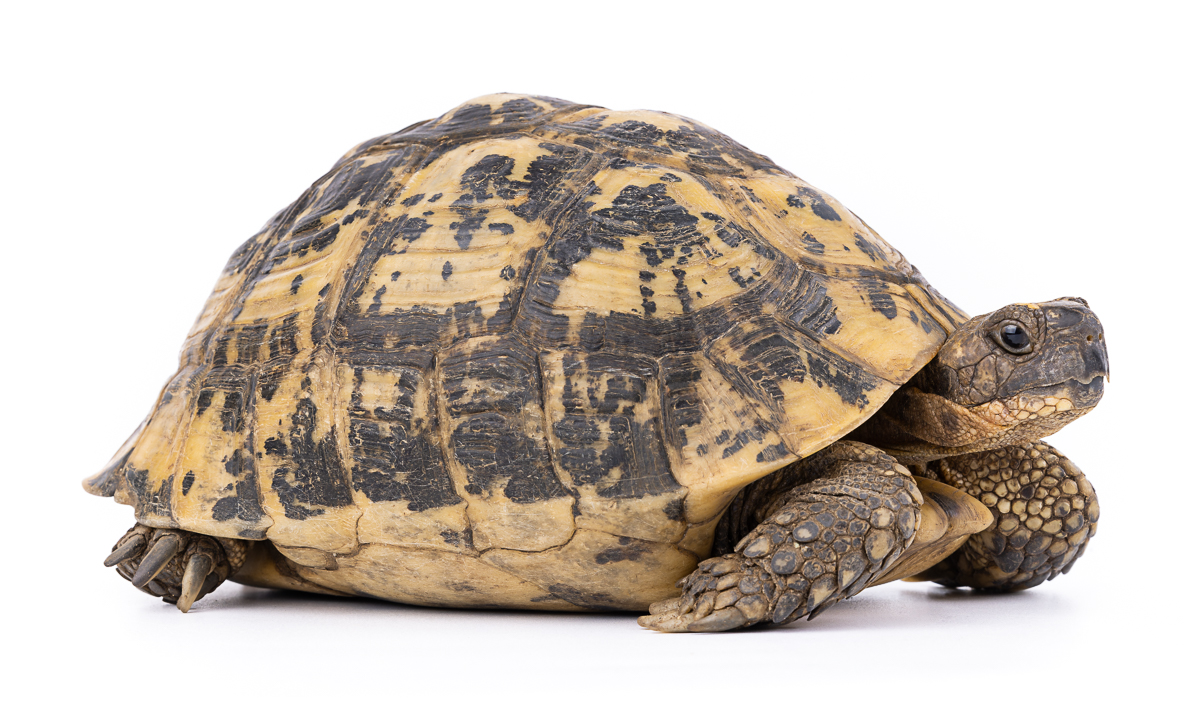
Moorish Tortoise
Testudo graeca
Page coming soon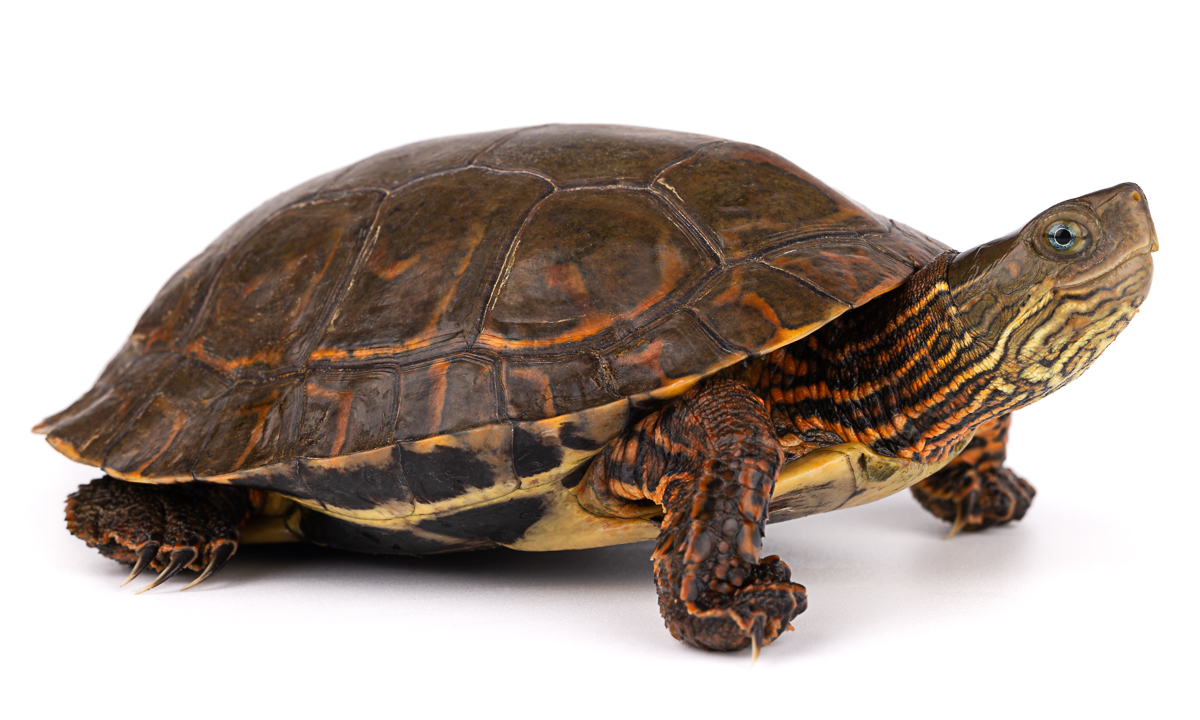
Mediterranean Pond Turtle
Mauremys leprosa
Page coming soon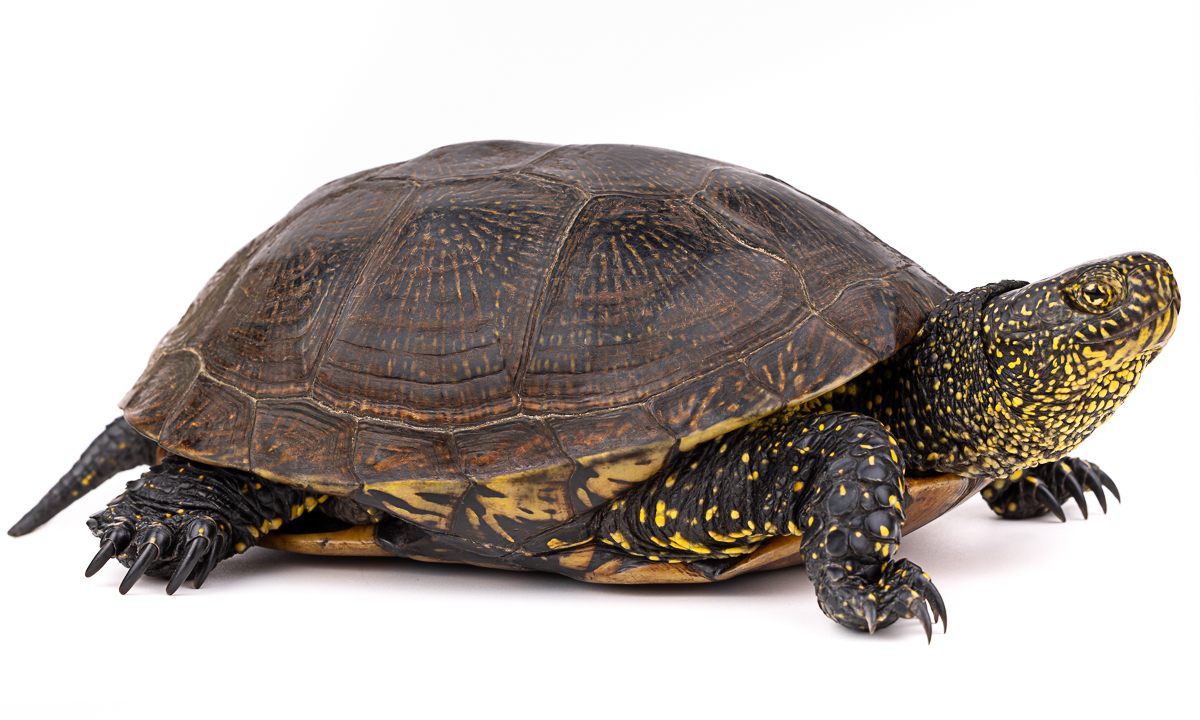
European Pond Turtle
Emys orbicularis
Page coming soonNo species matches that. Try the Latin name, or clear the search.
The full list of Morocco's 3 land and freshwater turtle species.
Testudinidae · 1 species
Geoemydidae · 1 species
About this checklist
Our list follows the most recent reference checklist of Moroccan herpetofauna (Bouazza et al., 2021). We revise and expand it as new studies appear. For a small number of species, we have drawn our own conclusions in light of the latest data (endemism status, species boundaries).